Gibraltar Casino Licence and UK Gambling Rules
 Available in GB
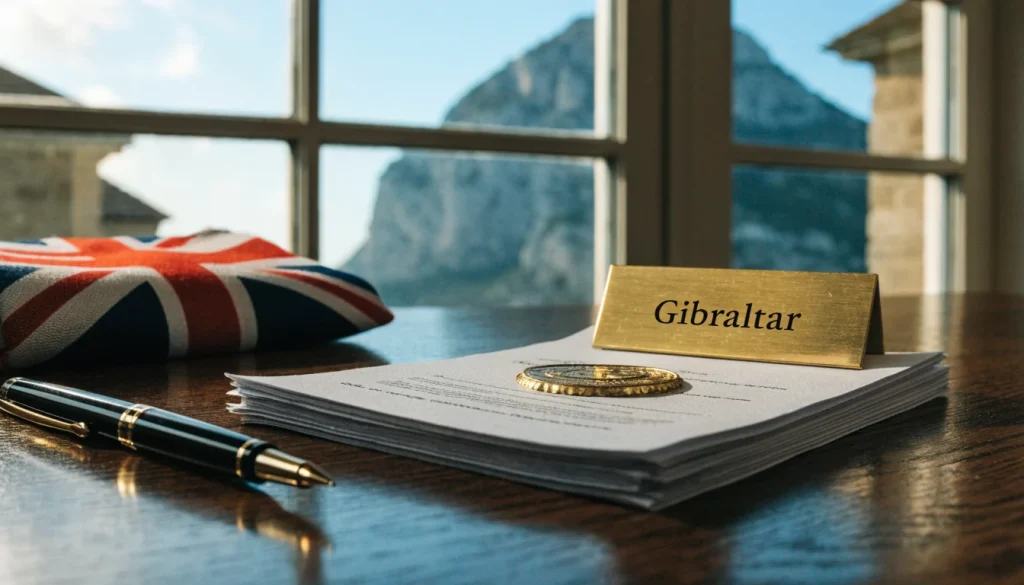
A Gibraltar connection may identify an operator’s licence or base, but it does not establish authorisation to serve Great Britain.
Table of Contents
- What a “Gibraltar Casino” Means for UK Players
- Gibraltar Casino Sites: The Licence Is Not the Whole Story
- How to Judge a Casino’s “Best” Claims Without the Sales Pitch
- “Top” Gibraltar Casino Sites and the Jurisdictions Behind Them
- Real-Money Play: Payments, Bonus Terms and Getting Your Money Out
- What a Gibraltar Casino Licence Does—and Does Not—Tell You
- Gibraltar iGaming Casinos: Checks, Complaints and Player Protection
- Using an Online Casino from the UK: Access and Self-Exclusion
- New Gibraltar Casino Sites: Take Verification Slowly
- Why Casinos Choose Gibraltar—and Why Anjouan Is a Different Case
- Casino Guides
What a “Gibraltar Casino” Means for UK Players
When a site describes itself as a Gibraltar casino, that tells you something about its connection to Gibraltar. It does not, by itself, tell you whether the site is authorised to provide gambling services to customers in Great Britain. Those are separate questions, and I used to treat them as if they were the same. They aren’t.
Gibraltar is one of several jurisdictions that may license online casinos. Malta, Curacao and Anjouan are others. A casino may point to a Gibraltar connection because of its licensing or the place where its business is based. But neither the word “Gibraltar” nor a Gibraltar online gambling licence is another name for a licence from the UK Gambling Commission.
For customers in Great Britain, the key distinction is who regulates the gambling service being offered. An operator serving customers here needs a UK Gambling Commission licence, no matter where the operator is based. So a casino’s address or overseas licence does not replace the UK requirement. A Gibraltar connection alone cannot establish that the operator holds the authorisation required to serve the British market.
That is what “non-UK-regulated casino” means in this context: an online gambling site operating without oversight from the UK Gambling Commission. A site can have a licence from another jurisdiction and still be outside the UKGC system. The two descriptions can both be true. It’s easy to miss that when a page gives its overseas licence a prominent badge and leaves the UK position less obvious.
I’d keep the questions separate. Is the operator connected with Gibraltar? Which jurisdiction, if any, licenses it? And does it hold the UK Gambling Commission licence required to serve customers in Great Britain? The first answer does not supply the third. “Licensed” sounds reassuring, but the important detail is which regulator issued the licence and what market the operator is serving.
The wording can also blur the difference between a Gibraltar casino and a casino available to British customers. A site may be described as a Gibraltar online casino because of its jurisdictional connection; that description alone does not mean it is authorised for Great Britain. Equally, the operator’s location does not change the licensing requirement when it serves customers here.
Casino Guides: UK Online Casino Topics
I’m not saying the place named in a licence tells you nothing. It tells you which jurisdiction the claim points to. It just doesn’t settle the separate UK question. For players in Great Britain, a Gibraltar label should never be read as shorthand for UKGC regulation. Different regulator. Different status.
Gibraltar Casino Sites: The Licence Is Not the Whole Story
When I first looked at Gibraltar casino sites, I treated a Gibraltar address as if it answered the main question: could the casino serve me in Britain? It doesn’t. A company’s base, the regulator named on its site and its permission to offer gambling to customers in Great Britain are separate things. One label cannot stand in for the others.
Start with the exact claim, not the badge. Is the operator saying it is incorporated in Gibraltar, has a Gibraltar gambling licence, or both? Those statements are not interchangeable. A company may be based in one place while its gambling business is licensed elsewhere. And even a genuine licence from Gibraltar does not, by itself, establish that the operator has the UK Gambling Commission permission required to serve customers in Great Britain.
That distinction is easy to miss when a site puts a flag, regulator’s name or “licensed” label beside its logo. I used to read those details as a broad seal of approval. They only tell you what they actually say. A Gibraltar connection is not the same as UK authorisation; a claim about a company’s registered location is not proof of its licensing status.
Read the operator details, not just the branding
Look for the legal company name behind the casino and compare it with the name used in the licensing statement. If the site gives a licence number or links to a regulator, follow the link and see whether the details identify the same business. A logo alone is not much to go on. If the names differ, the site should explain the relationship clearly; if you cannot work out who is responsible for the service, pause rather than filling in the blanks yourself.
Do
- Compare the legal company name with the licensing statement
- Follow links to regulators to verify business details
- Search the UKGC register for the actual company name
Don’t
- Rely on a logo or badge as a seal of approval
- Infer permission from a working registration page
- Treat a Gibraltar licence as a substitute for UKGC authorisation
Also check what the operator says about the customers it accepts. A page that mentions Gibraltar, serves a broad international audience and displays a licence may still leave its UK position unclear. Read the terms and the site’s legal information for a direct statement about Great Britain and the relevant authorisation. Don’t infer permission from the fact that the registration page loads or that the site accepts a UK address. Access is not proof of approval.
The UK Gambling Commission’s register is the place to check whether an operator has the relevant British licence. Search for the actual company, not only the casino’s trading name. If you find a similarly named business, that does not establish that it is the same operator. Match the details carefully and look at what the entry says the business is authorised to do. If no matching operator appears, don’t treat a Gibraltar licence as a substitute.
This is where phrases such as “international casino” can blur the picture. They describe a reach or a brand image, not necessarily a regulator or permission to serve a particular market. The same goes for “Gibraltar online casino sites”: the phrase could refer to companies based there, sites licensed there, or simply casinos using Gibraltar in their promotional copy. Ask which one the operator means.
The legal distinction is about who supplies the service. The Gambling Act 2005 is directed at operators providing gambling services into the UK market, rather than making an individual player the target of that rule. British law does not expressly bar citizens from using gambling services licensed abroad, and playing on an unlicensed site is not, in itself, a criminal offence for the player. That does not turn such a site into a UK-authorised casino, or mean it is a sound choice.
Casinos Without a UK Licence: UK Rules Explained
I’d keep the checks simple: identify the contracting company, verify the licence claim with the named regulator, then separately establish whether the operator has the UKGC permission needed for Great Britain. If a site leans on its Gibraltar connection but gives no clear account of its UK status, treat that as an unanswered question, not a reassuring answer. I’ve learned that the hard way: polished branding can make a vague claim feel more definite than it is.
For online slots or table games, the same distinction applies. A catalogue described as Gibraltar slots says nothing by itself about who operates the site or whether it is authorised for British customers. Don’t let the games, location language or a familiar payment logo distract you from the company and its permissions. Check before creating an account, and remember that you remain responsible for understanding the local rules and implications of using a service licensed abroad.
No guesswork.
How to Judge a Casino’s “Best” Claims Without the Sales Pitch
“Best” is doing a lot of work in casino advertising. It might mean a polished website, a big game catalogue or a welcome offer that looks generous before you read the conditions. I’ve learned not to treat the word as evidence. If you’re weighing up a casino site connected with Gibraltar, start with what would matter when something goes wrong, not how confident the headline sounds.
Reviews calling a site one of the "best" may be describing the player experience or repeating a sales pitch; a verdict without reasons is merely decoration.
A review calling a site one of the best online casinos in Gibraltar may be describing the player experience, or repeating the operator’s sales pitch. Those aren’t the same thing. Look for a clear explanation of what was assessed and what the reviewer could actually verify. If every feature gets glowing praise and there’s no discussion of drawbacks, I’d give the verdict little weight. A verdict without reasons is decoration.
Look past the visible features
A sleek lobby and familiar games can make a site feel reassuring. They don’t tell you how much support you would have if a dispute arose, or what safeguards apply to your account. I used to take a professional-looking site as a sign that the less visible parts would be just as solid. That was a poor shortcut.
Instead, look for specific, plain-language information about responsible gambling and the handling of personal data. Non-UK-regulated casinos may operate with less demanding responsible-gambling and data-protection rules than casinos licensed by the UK Gambling Commission. That is a meaningful difference, not a technical footnote. If a review praises a site’s “player protection”, check whether it explains what that means in practice rather than repeating a badge or slogan.
Merkur Casino Online UK: Slots, Licences and Terms
A useful test is whether you can find the relevant information before you sign up, and whether it is understandable without decoding promotional language. A feature described as “complete control” is not much help if the details are hard to find. If the reviewer doesn’t examine these things, the review hasn’t established that the casino is a good choice for you.
Ask what recourse actually exists
A “best casino site” label can make the decision feel settled. It shouldn’t. Consider what route you would have if you believed a decision was unfair. When you play at a non-UK-regulated casino, you cannot turn to the UK’s Financial Ombudsman Service in the way you might expect from a UK-regulated financial service, and UKGC-mandated responsible-gambling tools are not automatically part of the deal.
That matters more to me than a row of stars. A reviewer should distinguish between the casino’s own support team and an outside route for help; they are not interchangeable. Don’t assume that a site’s claim of being “trusted” tells you who can step in if you and the operator disagree. Nor does a high rating create protections that aren’t available under the arrangement.
I’m not saying a glossy site must be bad. I am saying that a review which never discusses what happens when the experience stops being smooth has left out a central part of the judgement. The hard bit counts.
When playing at a non-UK-regulated casino, you cannot turn to the UK’s Financial Ombudsman Service or rely on UKGC-mandated responsible-gambling tools.
Treat rankings as opinions, not guarantees
If you see “best online casinos” presented as a definitive ranking, check whether the page separates facts from opinion. Does it explain why one casino scored well? Does it discuss weaknesses as well as attractive features? Can you tell whether the assessment is independent, or whether the page is trying to steer you towards a particular sign-up?
Those questions won’t make a non-UK-regulated casino equivalent to one overseen by the UK Gambling Commission. They can, however, help you spot when a “best” claim tells you more about the page promoting the casino than about the protections available to you. A ranking is a starting point for scrutiny, not a substitute for it.
I also try to notice what a review avoids saying. If it spends its space on design and games but skips responsible-gambling safeguards, data protection and routes for recourse, I don’t fill in those blanks with optimism. The absence of a warning is not reassurance.
My rule is simple: read “best” as “best according to someone”, then find out what that someone actually checked. If the evidence is thin, the praise is thin too.
“Top” Gibraltar Casino Sites and the Jurisdictions Behind Them
If you are checking casino licensing for the UK in 2026, verify an operator’s current licence directly rather than inferring it from a list. The payout details below are the only operator-specific information provided.
1. x3bet
Payout speed: 1-3 business days x3bet lists a payout speed of 1–3 business days. You can use this as a stated processing timeframe, but it does not establish the operator’s licensing status.
2. Chanze
Payout speed: 1-3 business days Chanze lists a payout speed of 1–3 business days. You can treat this as the stated payout timeframe, not as evidence of a Gibraltar or UK licence.
3. EvoSpin
Payout speed: 1-3 business days EvoSpin lists a payout speed of 1–3 business days. You should check its current licensing details separately.
4. Britsino
Payout speed: 1-3 business days Britsino lists a payout speed of 1–3 business days. This is the only specific operator detail provided; verify licensing independently.
5. Dieselwin
Payout speed: 1-3 business days Dieselwin lists a payout speed of 1–3 business days. You should not take that timeframe as confirmation of its licensing status.
6. BeOnBet
Payout speed: 1-3 business days BeOnBet lists a payout speed of 1–3 business days. Check current licence information separately if licensing is your priority.
7. Amunbet
Payout speed: 1-3 business days Amunbet lists a payout speed of 1–3 business days. No licensing details are provided, so verify those directly.
8. Zombillion
Payout speed: 1-3 business days Zombillion lists a payout speed of 1–3 business days. You will need to check its current licensing details separately.
9. NightWin
Payout speed: 1-3 business days NightWin lists a payout speed of 1–3 business days. This stated timeframe does not confirm whether it holds a Gibraltar or UK licence.
10. Jetsetspins
Payout speed: 1-3 business days Jetsetspins lists a payout speed of 1–3 business days. Verify its licensing status independently; no licence information is provided here.
A “top” label can make it sound as though Gibraltar is a single category of casino, with a neat group of sites that all operate under the same rules. It isn’t. The label may refer to a casino’s connection with Gibraltar, but non-UK-regulated casinos can also be licensed in places such as Malta, Curaçao or Anjouan. Those are different jurisdictions, not interchangeable stamps of approval.
I used to treat the country named in a casino’s footer as a shortcut: find a familiar place, relax a bit, move on. That was too easy. A jurisdiction tells you where a licence may come from; it doesn’t, by itself, explain every rule that applies to the operator or what you can expect if something goes wrong. The word “top” tells you even less. It is a judgement, not a regulatory category.
One label, different licensing jurisdictions
A Gibraltar-linked casino and a casino licensed in Malta may both turn up in a search for leading online casinos associated with Gibraltar. But that shared search description doesn’t make their licences the same. The same goes for casinos licensed in Curaçao or Anjouan. Each jurisdiction has its own authority and framework, so you should not assume that a requirement or protection associated with one applies to another.
That distinction matters even before you get to a site’s individual terms. If a casino describes itself as “Gibraltar” in a headline but its licensing information names a different jurisdiction, those statements are not necessarily describing the same thing. One may be marketing language; the other may identify the licence. Read the actual wording rather than letting a location in the name do the explaining.
No shortcut there.
What “top” can—and cannot—tell you
A ranking can be useful as a starting point for research, but it can’t settle whether a site is right for you. I’ve learned not to confuse a confident ranking with a clear account of who licenses a casino. A page can group sites under one geographic label even when their licensing jurisdictions differ. That is a reason to slow down, not proof that the sites share the same standards.
Look for the jurisdiction stated in the casino’s own licensing information, then compare that with the description being used to promote it. If the wording is vague, or if “Gibraltar” appears prominently while the licence details point elsewhere, don’t fill in the gaps yourself. A list can still call itself the top Gibraltar casino sites; the name of the list doesn’t confirm the licence behind each entry.
The point isn’t that one place-name automatically makes a casino good or bad. It’s that the name alone cannot carry that much weight. Malta, Curaçao, Gibraltar and Anjouan are examples of jurisdictions where non-UK-regulated casinos may be licensed, but the fact that all appear in the same broad market conversation does not make them equivalent.
When you see a “best” or “top” label, take it as an invitation to check the details, not as a decision made for you. Separate the casino’s branding from the jurisdiction named in its licence information. Then judge the site on what that information actually says, rather than on a tidy list title.
Real-Money Play: Payments, Bonus Terms and Getting Your Money Out
When you look at real-money casinos connected with Gibraltar, the payment logo is only the start of the story. Non-UK-regulated casinos may take credit cards, e-wallets, bank transfers or cryptocurrency, sometimes through alternative payment processors. The options shown at the cashier can vary, and a method that accepts your deposit does not necessarily mean you can withdraw to it.
That last detail is easy to miss when you are keen to get started. Before paying in, check the casino’s withdrawal rules for your chosen method: whether it is supported for cash-outs, what checks may be requested, and whether the operator can apply fees or other conditions. Don’t assume the route into the account is also the route back out.
Cryptocurrency deserves particular care. It can bypass the UK ban on credit-card-funded gambling, but that does not make it a safer way to deposit. Think about whether you understand the transaction and the consequences if a payment is delayed or disputed. A payment option is not a promise of easy recovery.
The clock is not guaranteed
Published payout descriptions do not always agree. One account of non-GamStop casinos puts withdrawals at between 24 hours and 5 business days, depending on payment method; another warns that they can take three or four weeks, with no regulatory clock to force the operator to act sooner. Treat the faster estimate as a possibility, not a commitment. Processing may also depend on the casino’s own checks and terms.
A specialist review has also reported that some non-UK-regulated casinos set daily, weekly or monthly withdrawal caps, which can mean taking a large win in instalments. That is not a rule you should assume applies everywhere. Look for the actual cap in the terms before depositing, and check whether it changes depending on your account or payment method.
The point is not to assume every payout will be a problem. It is to avoid building your plans around money arriving by a particular date when the operator’s terms may leave room for delay.
Payout Risks
Withdrawals at non-UK-regulated casinos may take several weeks with no regulatory clock to force action, and some operators apply daily, weekly, or monthly caps.
Read the bonus maths before you opt in
A bonus can make a balance look larger without making that balance withdrawable. The wagering rule is the part that tells you how much eligible play is required before bonus-related funds can be cashed out. A specialist review has described offers with a 40x requirement, but the calculation can apply to the bonus and deposit together, to the bonus alone, or to the bonus and free spins together. Those are very different conditions.
Check which games count, whether there is a time limit, and what happens if you withdraw before completing the requirement. Read the terms for the specific offer rather than relying on a headline such as “extra cash” or “free spins”. Marketing copy is short. The conditions are where the catch lives.
I’ve learned not to treat a bonus as money I already have. If the rules are unclear, skipping the offer may be simpler than trying to untangle it later. A clean balance is easier to understand.
Before making a deposit, save or note the payment and bonus terms you are accepting. If the casino later applies a limit or delays a withdrawal, those details give you a clearer record of what was stated. Don’t deposit money you may need back quickly. A cashier can make paying in feel immediate; getting money out may be a different matter.
What a Gibraltar Casino Licence Does—and Does Not—Tell You
A Gibraltar casino licence can sound like a reassuring stamp. I used to see a named regulator and stop asking questions. That was the mistake: the licence tells you something about the operator’s regulatory connection, but it does not, by itself, tell you what protections apply when you play from Great Britain.
The key distinction is between a Gibraltar licence and a UK Gambling Commission licence. They are not interchangeable. A casino serving customers in Great Britain must hold the relevant UKGC licence, regardless of where the operator is based. So a site’s Gibraltar connection does not establish that it is authorised to offer gambling to people here. If it has no UKGC oversight, it is a non-UK-regulated casino, even if its own pages prominently display a Gibraltar licence.
That difference matters most when something goes wrong. At a UKGC-licensed casino, the operator is subject to the British regulatory system. At a non-UK-regulated casino, you cannot assume that the UKGC can review your complaint or make the operator resolve it. The same goes for the UK’s Financial Ombudsman Service: players at non-UK-regulated casinos do not have access to it through the UK gambling system.
I learned not to treat a regulator’s logo as a promise of practical help. A licence label may tell you which authority the operator says oversees it. It does not guarantee that you can bring a dispute to a UK body, or that a UK complaints route will be available if you and the casino disagree. Those are separate questions.
The label also does not mean British responsible-gambling protections automatically follow you to the site. Non-UK-regulated casinos do not necessarily provide the mandatory tools associated with UKGC-licensed operators. Before depositing, check what controls the site actually offers and whether you can use them in a way that suits you. Don’t assume that a familiar-sounding licence means the same safeguards are in place.
Jackpot Mobile Casinos in the UK: How They Work
A Gibraltar online casino licence, then, is not a shortcut for judging your position as a UK player. It does not substitute for UKGC oversight, and it does not create access to UK complaint services. A well-designed site and a polished explanation of its licence can still leave those points unanswered.
I’d read the licence wording carefully, then look for a UKGC entry that matches the operator and the service being offered. If that oversight is absent, treat the site as outside the UK regulatory system and weigh the lack of UK recourse before deciding whether to use it. You are also responsible for checking the laws that apply to you and understanding the implications of using gambling services licensed elsewhere.
That’s the line. A licence may matter, but it is not the whole safety net.
Gibraltar iGaming Casinos: Checks, Complaints and Player Protection
When something goes wrong, the useful question is not whether a casino looks polished. It is what happens after you send a complaint or ask to withdraw your balance. I’ve learned to look for that before depositing, not while refreshing an inbox and hoping someone replies.
Start with the complaints process. Find the operator’s own terms and support pages, then check whether they explain how to submit a complaint, what information to include and how the casino will respond. Keep copies of the relevant terms, messages and transaction records. If the reply is vague, ask for the decision and its reasons in writing. A live-chat promise is hard to rely on later if there is no record.
Be precise about which regulator is named. Rules differ between jurisdictions, and a regulator’s name on a page does not, by itself, tell you whether it will take up an individual dispute. Anjouan illustrates why the distinction matters: its authority does not handle, mediate or decide player complaints. Its framework requires operators to respond to complaints within 30 calendar days, but an Anjouan-licensed casino does not offer an independent dispute-resolution route comparable to UKGC-approved ADR. A response deadline is not the same thing as an independent appeal. That’s the catch.
Do not transfer those Anjouan details to Gibraltar. They describe Anjouan’s framework, not the Gibraltar online casino industry. If a site says it is licensed in Gibraltar, check what complaint route its own terms actually describe and which body, if any, can consider a dispute. If the answer is simply “contact support”, treat that as the operator’s process—not as proof that an external body will step in.
Verification deserves the same calm attention. A casino may ask for documents before releasing a withdrawal, so read its identity-checking terms before you play and make sure you can provide the information it says it needs. A specialist review has reported cases involving requests for notarised documents or video calls during withdrawals. That is a reported possibility, not a standard requirement at every casino. If a request seems excessive or keeps changing, ask what term it relates to and why the information is needed. Keep the request and your reply in writing.
Handling Complaints
Submit the complaint
Find the operator’s terms, submit your complaint with all required information, and keep copies of all messages and transaction records.
Request written reasons
If the response is vague, ask the operator to provide the decision and the reasons for it in writing rather than relying on live chat.
Verify the regulator
Check the specific jurisdiction’s rules to see if the named regulator handles individual disputes or only requires a response deadline.
A thorough check is not the same as an endless one. Before sending sensitive documents, confirm that the request came through the casino’s official channel and that the account details match the site you registered with. Avoid sending more than was requested. If you cannot get a clear explanation, pause rather than supplying extra material just to move the process along.
For any Gibraltar-connected site, the practical test is whether you can identify the operator, find the complaint instructions and understand what happens if support rejects your case. If those basics are hard to find before you deposit, they are unlikely to become clearer when money is involved. Better to notice early.
Using an Online Casino from the UK: Access and Self-Exclusion
I used to think signing up to GamStop meant I’d shut the door on online gambling, full stop. That was the wrong assumption. GamStop applies to gambling businesses in the UK Gambling Commission’s self-exclusion scheme; casinos outside that scheme are not covered by it. A Gibraltar connection does not change that point: if a site is not part of the UKGC scheme, a GamStop block will not automatically stop you reaching it or opening an account.
That distinction matters most when you are trying to take a break, not when you are comparing casino games. If you have self-excluded through GamStop, don’t treat access being blocked at UKGC-licensed sites as proof that every gambling site will refuse you. A non-UK regulated casino may still be reachable, and you may need to take separate steps to keep yourself away from it.
I’ve learned that the hard way: a barrier only works where it applies. Logging out, deleting an app or removing a saved payment method can add friction, but none of those is the same as a formal exclusion covering every site. Nor should you assume a casino’s own “responsible play” wording gives you the same protection as GamStop. Non-UK regulated casinos are outside the UKGC system, and the mandatory responsible-gambling tools available at UKGC-licensed operators do not automatically follow you there.
If you are trying to stop gambling, make the decision before browsing for an online casino with a Gibraltar link. Don’t rely on a welcome page or a self-exclusion badge to tell you whether GamStop applies. Check whether the operator is part of the scheme, and if it is not, treat access as possible rather than assuming a block will catch it. You can also avoid visiting the site and remove bookmarks or saved logins that make returning easy.
The uncomfortable bit is that a search for another casino can undo a boundary you set for a reason. If gambling is causing harm, use support that is available to you rather than treating a different site as a workaround. GamCare offers help and information for people affected by gambling. A pause should be a pause.
New Gibraltar Casino Sites: Take Verification Slowly
A “new” label can make a casino sound fresh, closely watched and eager to impress. It tells you none of those things. It only tells you how the site is being presented. When I’ve been tempted by a new Gibraltar online casino, I’ve had to remind myself that a polished launch page is not a track record.
Checking New Casinos
- Identify the operator’s legal name in the terms
- Verify the legal name matches account and payment info
- Read the specific withdrawal and identity-checking rules
- Save copies of the current terms and conditions
- Ask support about unclear verification steps in writing
Before putting money in, find out which company actually runs the site. Look for the operator’s legal name in the terms and check that the same name appears in the account, payment and contact information. If the details are vague, inconsistent or hard to find, pause. A recognisable Gibraltar connection does not answer every question about who you would be dealing with if something went wrong.
Then read the withdrawal rules before you deposit. Check what identity documents may be requested, when verification can happen, and whether the terms explain how a withdrawal is reviewed. Save a copy of the relevant pages. Terms can change, and relying on a welcome screen or a short promotional summary is how I’ve missed the detail that mattered.
There is a particular risk with a site that has little history: you may have less public evidence of how it handles a disputed payment or a difficult verification request. A specialist review has reported cases in which some offshore operators asked for notarised documents or a video call before releasing a withdrawal. That is not something to assume every casino will do, but it is a useful reminder to read the conditions carefully and ask support about any unclear step before you pay.
A quick answer from support is not proof that a later withdrawal will be straightforward. Keep the reply, and compare it with the written terms. If the answer avoids the question or adds a requirement that is not clearly explained, do not treat the launch offer as a reason to hurry.
I’ve made that mistake: I focused on the new-site excitement and left the awkward questions until I wanted my money back. Not clever.
For new online casinos linked to Gibraltar, the sensible approach is to verify the operator and withdrawal process first, then decide whether you are comfortable with the uncertainty. No launch badge can do that checking for you.
Why Casinos Choose Gibraltar—and Why Anjouan Is a Different Case
When I see a casino described as Gibraltar-based, I try not to turn that into a verdict. A company’s chosen base tells you where it says it operates from; it does not, by itself, explain the rules that apply to a particular casino or prove what protections a player would have. “Based in Gibraltar” is a location claim, not a complete account of oversight.
So why are online casinos based in Gibraltar? There may be business reasons for choosing the jurisdiction, but the label alone cannot tell you which ones apply to an individual operator. Nor should I assume that every Gibraltar-linked casino has the same arrangements. The useful point is simpler: Gibraltar and Anjouan are separate jurisdictions, and details established about one should not be carried across to the other.
Anjouan presents specific issues that are worth keeping distinct. Its framework does not require casinos to have their random number generators tested, undergo audits, or keep player funds segregated. That does not establish what a Gibraltar regulator requires; it describes the Anjouan framework only.
The consequences around player funds matter too. An Anjouan casino does not guarantee that player money is kept separate from the operator’s funds. If the operator fails, players are unsecured creditors. That is a concrete risk, not a general description of every casino with an international connection.
There is also a difference in who handles a complaint. The Anjouan authority does not take up, mediate or decide player complaints. That should not be presented as a fact about Gibraltar. Check the actual jurisdiction and regulator named for the operator rather than treating “regulated online casinos in Gibraltar” and Anjouan-licensed casinos as versions of the same thing.
I’ve learned not to let a familiar place name do the work of proper checking. A base, a licence and a regulator are related details, but they are not interchangeable. Keep the jurisdictions separate.
Can UK players legally play at casinos licensed in Anjouan?
UK law does not explicitly prohibit you from using gambling services licensed abroad, and playing on an unlicensed site is not a criminal offence. However, an Anjouan licence does not authorise a casino to serve customers in Great Britain; operators serving them need a UK Gambling Commission licence.
Can I complain to the Anjouan regulator if a casino won’t pay me?
No. The Anjouan authority does not handle or adjudicate player complaints, and Anjouan-licensed casinos do not have a comparable independent dispute-resolution route. Operators must respond to complaints within 30 calendar days.
How do casinos outside GamStop operate?
They operate outside the UK Gambling Commission’s self-exclusion scheme and may be licensed in another jurisdiction. Being outside GamStop does not itself establish that a casino is authorised to serve customers in Great Britain.
What payment methods work best at non-UK-regulated casino sites?
These sites may accept credit cards, e-wallets, bank transfers and cryptocurrencies, sometimes through alternative processors. Some also allow deposits through a mobile phone bill or prepaid balance; withdrawals commonly take 24 hours to five business days, though they can take longer.
Are sites that are not on GamStop legal for players in the UK to access?
UK law does not explicitly prohibit you from using gambling services licensed in another country, and players do not commit a criminal offence by gambling on an unlicensed site. But operators serving customers in Great Britain need a UK Gambling Commission licence, and not being on GamStop does not prove a site has one.
Is it legal for a UK player to gamble at an Anjouan-licensed casino?
UK law does not explicitly prohibit you from gambling with a service licensed abroad, and doing so is not a criminal offence. An Anjouan licence does not authorise the operator to serve customers in Great Britain, where operators need a UK Gambling Commission licence.
Casino Guides

Anjouan Casino Licence in the UK: What It Means
An Anjouan licence applies under Anjouan’s system; it does not replace the permission required to...

Casino apps in the UK: what to check before playing
A practical look at browser play and installed apps, with payment, withdrawal, bonus and game...

Foreign casinos for UK players: licence and risks
A UK-facing site can take pounds and accept British customers without holding a UK Gambling...

International Casinos for UK Players: A Licensing Guide
The label “international” says little about oversight, so licensing, terms, payment risks and access rules...

Paying by phone credit at UK mobile casinos
Phone-credit deposits add funds to a casino balance but are charged to a mobile bill...

Offshore casino sites for UK players: what to know
The key distinction is whether an operator accepts British customers without a UK Gambling Commission...

Offshore casinos for UK players: licences and risks
A foreign licence does not authorise service in Great Britain, and payment speed, bonuses and...

British Casinos Not on GamStop: What the Label Means
The label signals that a casino is outside GamStop’s exclusion system; it does not indicate...

No-ID Verification Casinos in the UK: What It Means
UK-licensed casinos must verify age and identity before gambling, even when registration appears quick or...

Casino sites not registered with GamStop: UK guide
These sites are outside GamStop’s UK regulatory reach, so licensing, payment checks and safer-gambling tools...

Non-UK Licence Casinos: What the Licence Means
A licence from Malta, Curaçao or elsewhere does not by itself show that a casino...

Casinos Without a UK Licence: UK Rules Explained
UK licensing duties apply to operators serving Great Britain, while players are not treated as...

Casinos that bypass GamStop: what UK players should know
A practical look at GamStop’s UKGC scope, offshore licensing, review claims and the limits of...

Curacao Casino Licence in the UK: What It Means
A licence claim is only one part of the picture: operator responsibility, UK rules, payment...

Jackpot Mobile Casinos in the UK: How They Work
Jackpot labels can describe different prize structures, while mobile play, licensing, payouts and bonus terms...

Merkur Casino Online UK: Slots, Licences and Terms
A practical guide to Merkur slots, casino site licensing, demo play and the terms that...

Trustworthy Online Casinos in the UK: What to Check
A practical guide to checking UK authorisation and the safeguards that matter before depositing real...

No-account casinos in the UK: what to check
The label describes a sign-up or payment process, not a separate type of casino or...

No-ID Verification Casino Withdrawals in the UK
Understand when identity checks arise and how cashout timing, limits and payment routes affect withdrawals....

Non-GamStop casinos in the UK: what the label means
GamStop is a free, multi-operator self-exclusion scheme; a casino’s non-participation does not establish its safeguards...

Non-GamStop Curaçao Casino Sites and UK Exclusion
The article explains the distinction between Great Britain’s regulated market and Curacao casino claims, including...

Non-GamStop European Casinos: What the Label Means
A European label alone does not show which regulator oversees a casino or whether it...

Non-UK-Registered Casinos: Licences and Protections
Company location, overseas licensing and GamStop status are distinct, with different implications for payments, bonuses...

Non-UK Regulated Casinos: What UK Rules Cover
A clear guide to UKGC licensing, offshore operators, and the protections and checks involved in...

Non-UKGC Licensed Casinos: What the Licence Means
A casino licensed outside the UK is not thereby authorised by the Gambling Commission to...

Online Casino Malta MGA Licence in the UK: What It Means
An MGA licence and a UKGC licence are separate authorisations, and a Malta-based operator must...

Online Casino No Registration UK: What It Means
Browser access can skip a software download, but real-money gambling may still involve checks, while...

Online Casinos with No Sister Sites in the UK: What It Means
A practical guide to distinguishing common ownership from shared software and checking what a casino’s...

Online slots not on GamStop: what the term means
GamStop applies to participating UKGC-licensed operators, not individual games, and playing on a phone does...

Safe Online Casinos in the UK: What to Check
UKGC authorisation, account safeguards, payment checks and bonus terms all shape what safety means in...

Highest-Paying Online Casinos UK: How RTP Works
RTP is a long-run mathematical average, not a forecast of an individual session or a...

Trusted Casinos Not on GamStop UK: Key Checks
A practical look at licences, bonus terms, withdrawals and safer-gambling protections at casinos outside the...

Trusted UK Casinos: What a Licence Really Means
A licence sets the regulatory baseline, while register entries and site terms still need separate...

USA Casinos for UK Players: Licensing and Risks
American branding alone does not establish a site's location, US regulation or UK Gambling Commission...

VPN-Friendly Casinos in the UK: What to Know
A site's willingness to accept VPN connections says little about its licence, safeguards or verification...